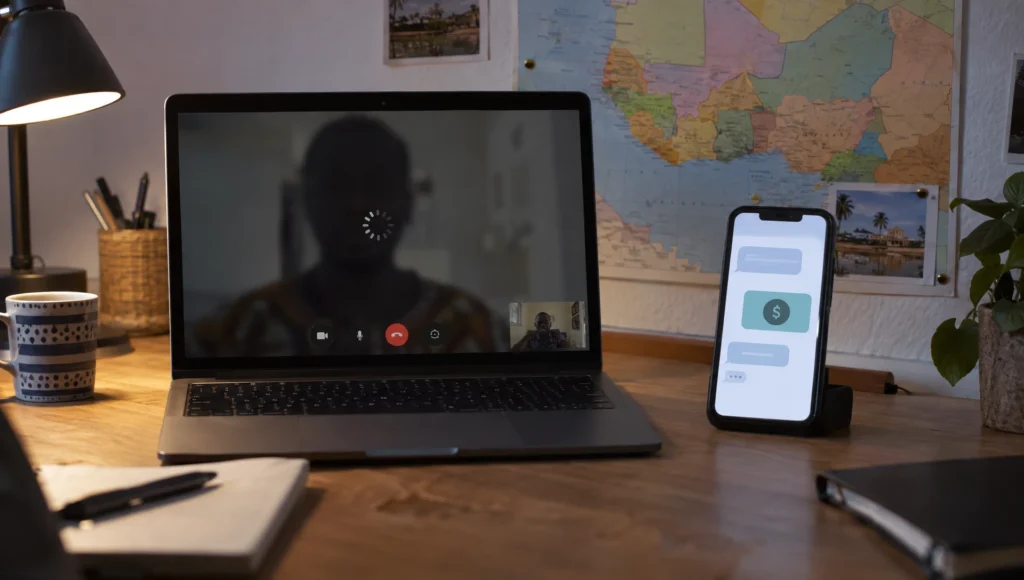
Treat any online match who delays video, pulls you off the dating app fast, and then hits a money emergency as a scam, whatever country they claim to be in. The Ghana label sticks because so many of these scripts trace back to West African advance-fee romance fraud, but the geography in the pitch can shift while the script rarely does. Trust first, transfer second, disappearance third.
What does this scam look like in practice?
You usually end up searching for Ghana romance scams after a suitor’s story, payment rails, or phone trail points toward West African advance-fee romance fraud. The operator steals or AI-generates photos, claims a high-status U.S. or European life, delays video, then invents hospital bills, customs fees, or travel costs. The product being sold is emotional investment, not a relationship.
Why does this label exist, and what does it not mean?
Public reporting and victim forums long associated certain romance-fraud playbooks with Ghanaian and broader West African cybercrime scenes, including crews sometimes discussed under local slang for fraud. That history is why searchers type “Ghana romance scams” after a profile cracks. It does not mean honest people from Ghana are suspects by default. Scammers also impersonate Americans stationed “on oil rigs,” soldiers, and doctors in other countries. Judge the behavior, not the passport stamp in a selfie.
The fee-first skeleton underneath is older than dating apps. If you want to see the earlier version of the same trust-then-fee playbook, our explainer on what 419 scams are covers the advance-fee letters these romance crews grew out of.
Romance fraud overall is a major U.S. loss category. The FBI’s romance scam guidance stresses that criminals invest weeks or months in grooming before any ask. Cross-border payment methods and mule accounts make recovery hard once wires, crypto, or gift cards leave your control.
Some rings run like shifts: different people type as the same “beloved” so the chat never sleeps. Others specialize in one job: photo sourcing, script writing, cash-out. You are chatting with a workflow. That industrial quality is why the language can feel both intimate and oddly templated, and why the same hospital-invoice PDF reappears across unrelated victims months apart.
How does the grooming move from match to money?
Day one is flattery and rapid “destiny” language. Within a week the chat leaves the dating app for WhatsApp, Google Voice, or text, away from platform safety tools. Love declarations arrive early. Work is always intense, travel is always imminent, and video is always “about to happen” after the next shift.
Somewhere between week three and month three, crisis appears. A parent’s surgery. A container stuck in customs. A ticket home that needs “upgrading.” The amounts start small, “just until Friday,” then escalate. Victims who pay once are marked as profitable; the emergencies multiply. If you refuse, guilt and anger scripts deploy. If you pay large, the persona may vanish or hand you to a “recovery” thief.
A realistic mini-scene: you match with a polished engineer who works nights. Voice notes sound warm; live video is blocked by “site security.” After six weeks of daily messages, a warehouse accident story lands with a hospital invoice PDF. The account that should receive funds is a friend’s, a crypto wallet, or a cash-transfer handle with a mismatched name. That mismatch is the whole business model.
If the person feels real but the camera never turns on, our guide on signs you are being catfished covers the tests that separate a shy match from a fake one.
Which signals in language, photos, and logistics matter?
No single signal convicts. Clusters do. Stock or reverse-image-searchable photos. Profiles that refuse any live proof. Stories that rewrite hometowns, ranks, or children’s ages. Pressure to keep the relationship secret from family. Requests that you lie to your bank about the purpose of a transfer. The wider pattern of pressure, secrecy, and shifting stories is the same one we break down in our list of common signs of a scammer.
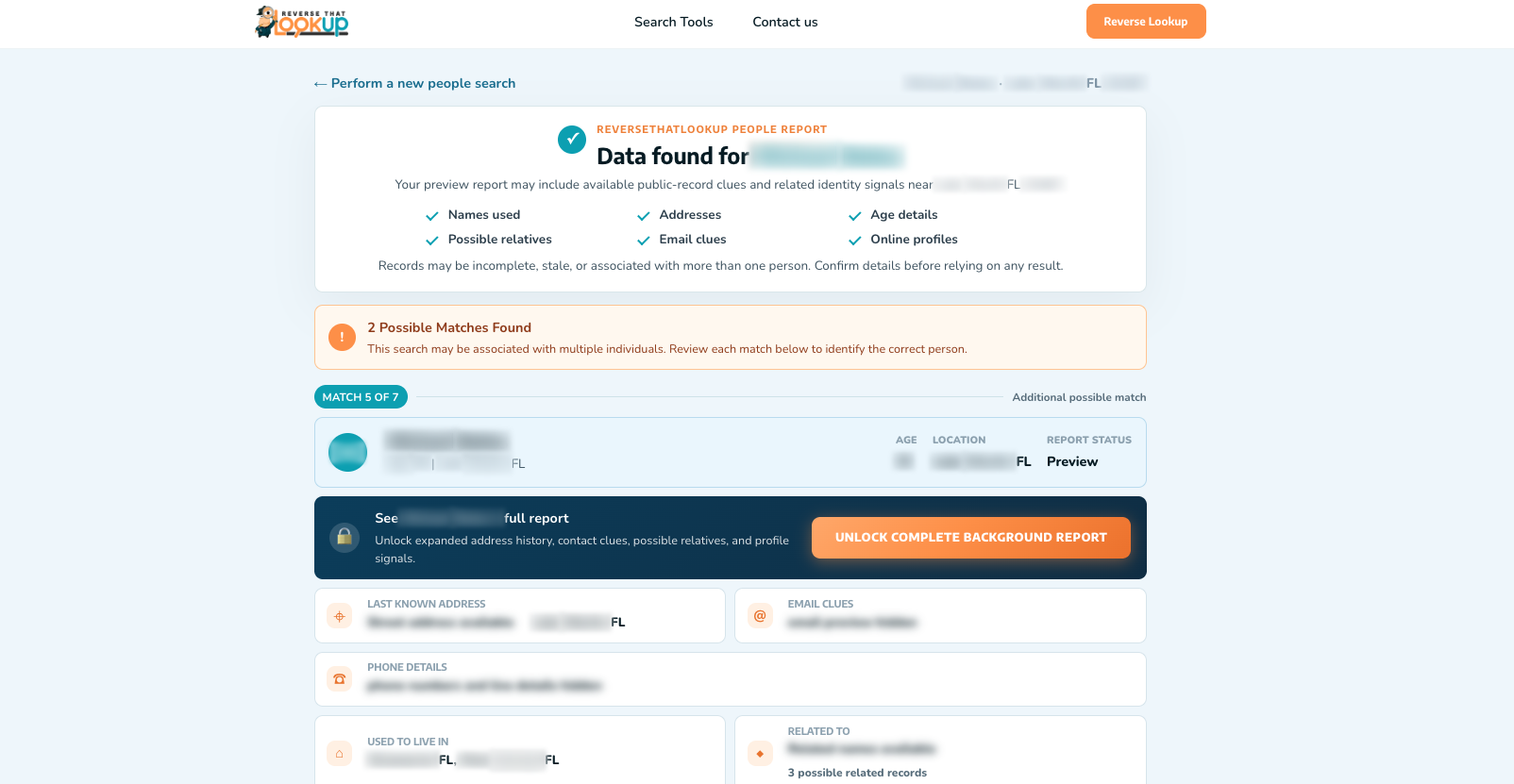
Phone numbers and emails deserve homework. Run a reverse phone lookup when a “U.S. cell” behaves like a rotating VoIP line or ties to unrelated names. Use a people search on the exact legal name they claim alongside city and age; empty or contradictory public traces undercut the biography they sold you.
| Pattern | Healthy dating counterpart | Fraud-leaning counterpart |
|---|---|---|
| Video chat | Scheduled, camera on | Endless excuses; only stills or voice |
| Money talk | Rare, mutual, optional | Early emergencies; one-way transfers |
| Platform | Stays or moves slowly | Immediate push to private apps |
| Identity proof | Consistent over time | Contradictions; stolen images |
| Secrecy | Normal privacy | “Don’t tell your kids/bank” |
| Payment method | In-person shared costs later | Gift cards, crypto, wire to third parties |
Which payment methods do scammers push?
Wires, cryptocurrency, cash apps to strangers, and gift cards remain favorites because reversal is slow or impossible. Fake checks that “overpay” you for a favor still appear in hybrid schemes. Anyone who coaches you to describe a transfer as “family support” when it is not is protecting their trail, not your dignity.
Never pay a customs fee so a romantic partner’s package can clear. That classic advance-fee line still circulates. Never fund a stranger’s passport, lawyer, or “UN” paperwork. Legitimate institutions do not collect those costs through your dating chat.
Watch for “investment coaching” that starts after romance is established. The person who loved your photos last month now has a private trading dashboard that needs seed capital. That hybrid is still romance fraud with extra charts. Ask who is licensed, where the firm is registered, and why intimacy had to precede the pitch. Honest advisors do not need a dating-app funnel.
How to exit cleanly and reduce the damage
Stop sending money immediately. Preserve chats, usernames, wallet addresses, and receipts. Tell a trusted person offline; isolation is part of the con. Report the profile inside the dating app, then file with IC3 and the FTC’s consumer scam resources so patterns can be tracked even when full recovery is unlikely.
If you shared bank details, ID images, or remote-access software, treat it as an account-security incident: password resets, MFA, credit freezes when identity data moved, and a call to your bank’s fraud desk. Block the numbers. Do not engage “agents” who message you later offering retrieval for an upfront fee. That is a second scam aimed at known victims.
Shame keeps losses private and therefore profitable. Romance fraud targets empathy and loneliness on purpose. Seeking help from family, a counselor, or AARP-style fraud education communities is a defense move, not a confession of foolishness. The operators write scripts; you are allowed to close the book mid-chapter.
What habits keep you safe on dating apps?
Keep early conversations on-platform. Video early if the match is steering toward commitment language. Refuse any financial ask before an in-person meeting you chose and controlled. For long-distance claims, demand live, interactive proof, not a prerecorded clip. Reverse-search photos when something feels off; our walkthrough on how to catch a catfish shows what to check when the pictures and the story do not line up.
Discuss money rules with yourself in advance: no wires to lovers you have not met; no gift cards for “medical” crises; no crypto tutoring from a romantic interest. Write the rule down. Scammers are skilled at making exceptions feel romantic. Your pre-decision is the seatbelt.
Older adults and people in recent grief are frequent targets because time online and hope for connection are high. Families can help by offering nonjudgmental check-ins about new online partners who resist video or request secrecy around money. Curiosity beats interrogation.
If you moderate a community group or help a parent with tech, practice a simple audit: Does this person appear on camera live? Have they asked for money or remote desktop access? Do their “documents” arrive only as images in chat? Three soft yeses mean you involve the bank and the dating platform before another transfer goes out. Speed protects more dollars than clever arguments inside the romance narrative.
Document storage matters too. Keep a folder of screenshots with dates. When you report, agents and platform teams need handles, wallet strings, and the first money request more than they need a full love story. Clear evidence shortens the call. It also helps you see the pattern on a bad day when doubt creeps back in.
Frequently Asked Questions
Are Ghana romance scams only run from Ghana?
Not always. The label grew from well-documented West African romance-fraud ecosystems, but copycats and diaspora operators appear elsewhere, and many scammers fake their location entirely. Focus on payment pressure, photo theft, and refusal of live verification rather than assuming nationality from a story or accent alone.
How long do scammers invest before asking for money?
Often weeks to several months. Early small asks may test compliance; larger “emergencies” follow once emotional dependency is high. Some switch to investment-romance hybrids after trust is built. Time invested is not proof of sincerity; professional fraud treats grooming as labor with expected return.
Can police recover money sent overseas?
Recovery is difficult once funds move through wires, crypto, or cash networks, especially across borders. Still report promptly: banks sometimes reverse recent transfers, and IC3 complaints support broader cases. Never pay a second party who claims special recovery powers for an advance fee after the first loss.
What is the single best test of a suspicious match?
Live video or an in-person meeting you arrange without secrecy, plus zero tolerance for money requests beforehand. Scammers fail interactive proof far more often than they fail scripted chat. If every camera attempt collapses into excuses while payment urgency rises, end the contact and report the profile.