

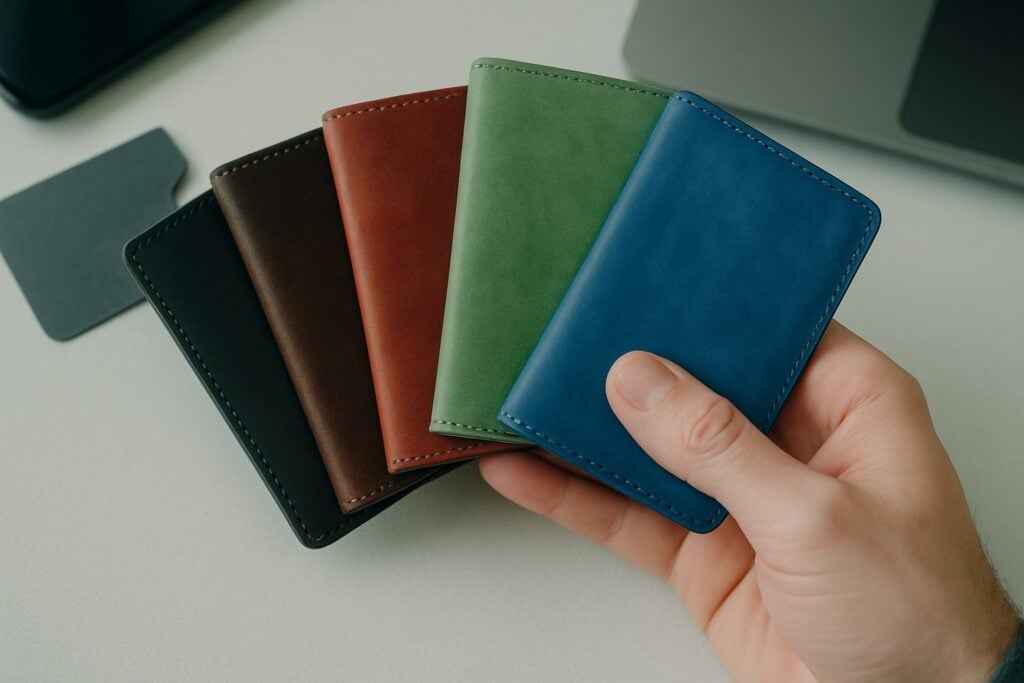
RFID blocking is a physical shield—usually a metal mesh, foil liner, or metalized card sleeve—that weakens or stops the radio field a contactless reader uses to power and query a chip. When people ask how does RFID blocking work, the short physics answer is Faraday-style attenuation: the liner absorbs or reflects energy so the card’s antenna never wakes cleanly. It does not encrypt your bank account, stop online fraud, or defeat a thief who steals the plastic itself.
How does RFID blocking work at the antenna level
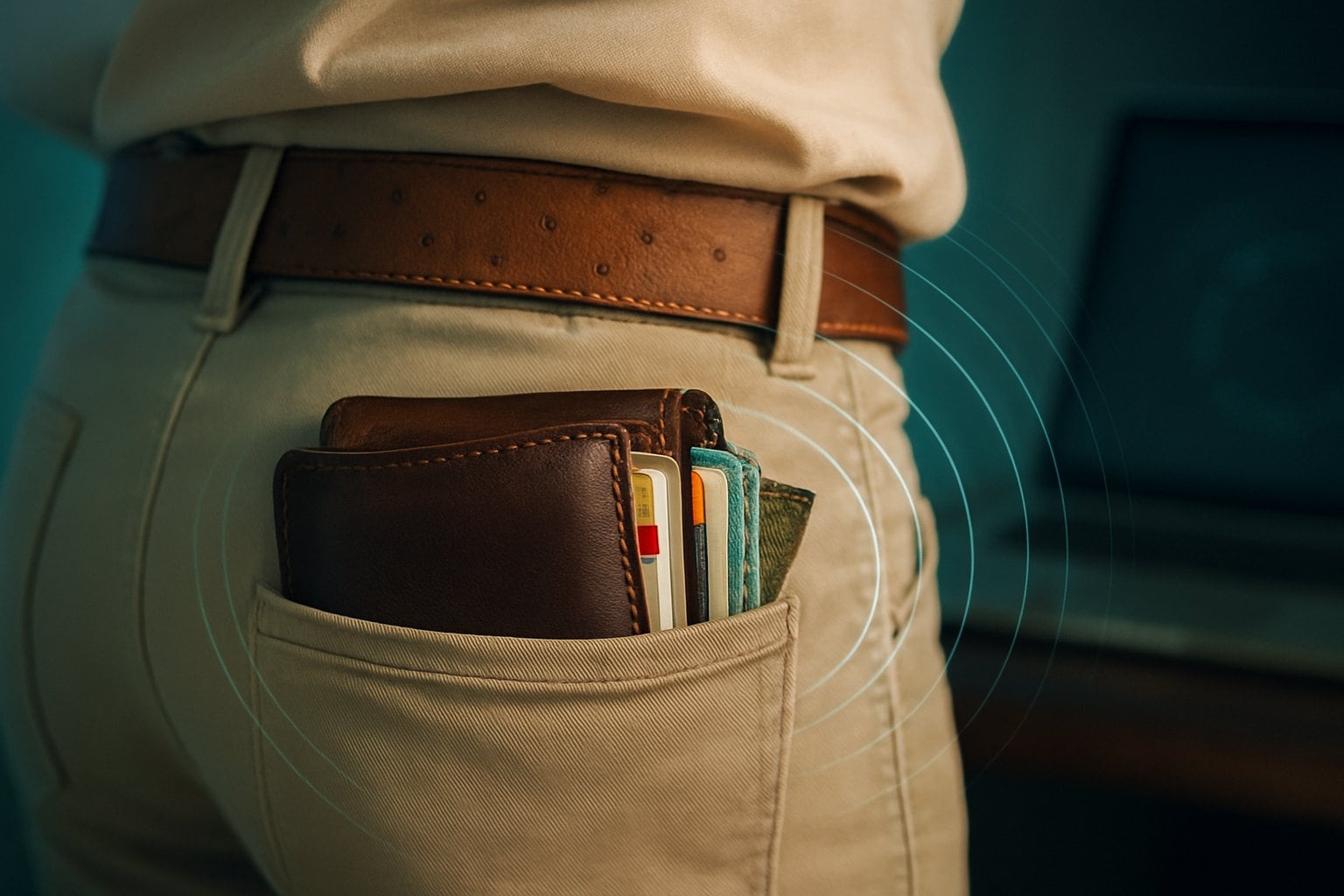
Contactless payment cards and many access badges use RFID or NFC: a reader emits a field, the card’s antenna harvests a little power, and the chip answers with a short-range exchange. Blocking materials sit between that field and the antenna. A continuous conductive layer around the card creates a partial Faraday cage; eddy currents in the metal dissipate energy that would otherwise power the chip. That is the same family of shielding ideas discussed in public explainers of a Faraday cage, scaled down to wallet size.
Performance depends on coverage, gaps, and frequency. A sleeve that fully wraps the card usually beats a strip of foil on one side. Wallets with only a thin decorative “RFID” logo and no continuous liner may do almost nothing. Cards stacked outside the lined pocket remain readable.
What contactless cards actually transmit
Modern payment networks design tap-to-pay for centimeters, not across a subway car. Tokens and dynamic data reduce the value of a one-time sniff compared with old static magnetic stripes. That does not make eavesdropping impossible in a lab with specialized gear; it does mean casual “digital pickpocket” panic is often oversold relative to skimmers, phishing, and account takeover.
Can RFID cards be hacked? In the broad sense, yes—researchers and hobby devices can interact with some tags under controlled conditions. In the consumer sense of a stranger silently draining your checking account while walking past your coat, successful mass attacks are far rarer than card-not-present fraud. For threat catalogs that dominate real losses, the FTC scams resource still points more often at social engineering than wallet radio magic.
| Protection layer | What it stops or slows | What it does not stop |
|---|---|---|
| RFID sleeve / lined wallet | Casual field coupling to the antenna | Stolen card use, online charges |
| Bank tokenization / chip crypto | Replay of static mag-stripe data | Phishing of one-time codes |
| Transaction alerts | Undetected small taps after theft | Initial skim of a physical card |
| Card freeze in app | Further authorizations after loss | Past posted charges |
Wallets, sleeves, and blocking cards compared
How does an RFID blocking card work when it is just another plastic rectangle? Some products are simple metalized shields you keep in the slot; others claim active interference. A passive metal card only helps if it sits so that it interrupts the field path for neighboring chips—geometry matters, and results vary by wallet layout. A full sleeve around each high-value badge is more predictable than one “blocker card” in a crowded bifold.
Passport covers with continuous liners address a different document chip. Payment cards and e-passports do not share one universal threat model; buy for the object you actually carry unlocked in a back pocket.
Mini-scenario: you keep a hotel key card and a contactless debit card in the same unlined clutch. The front desk rekeys fine at the door, but a conference badge reader a few inches away sometimes double-reads the wrong tag. Moving the debit card into a lined sleeve stops the misreads—not because thieves vanished, but because two antennas no longer couple in the same pocket field.
Limits, myths, and when blocking is worth buying
Blocking will not save you if someone steals the wallet, photographs the card numbers, or tricks you into a fake payment site. ATM inserts and chip shimmers target physical interfaces; security writers such as Krebs have documented shimmers aimed at chip cards, a problem orthogonal to radio wallets.
Marketing sometimes implies that every subway ride is a combat zone for your debit chip. Crowded transit is real; so is the fact that issuers monitor odd tap patterns and that liability rules for U.S. consumer credit cards usually favor the cardholder who reports fraud quickly. Fear of RFID is a poor reason to ignore bank alerts you already disabled.
Buy RFID protection if you carry many unsecured access badges, work in dense RF environments where misreads annoy you, or simply sleep better with a low-cost sleeve. Skip the expensive branded panic purchase if your real risk is reused passwords and shared OTPs. Price the liner like an umbrella, not like antivirus for your entire financial life.
Day-to-day habits that beat a logo on leather
Enable bank push alerts for every tap. Use lock-screen freezes when a card goes missing. Prefer virtual card numbers for online merchants when your issuer offers them. Keep PINs off sticky notes and never read a full card number to an unsolicited caller.
If a fraud call claims your tap card was “RFID hacked” and demands remote access software, treat it as social engineering. Verify with a number on the back of the card—not the inbound caller ID. A reverse phone lookup can show whether a callback number ties to a known spam pattern; a people search is only relevant if you are identifying a real local contact after theft, not for chasing anonymous radio ghosts. Report organized payment fraud patterns through channels such as IC3 when losses are significant.
Testing whether your sleeve actually shields
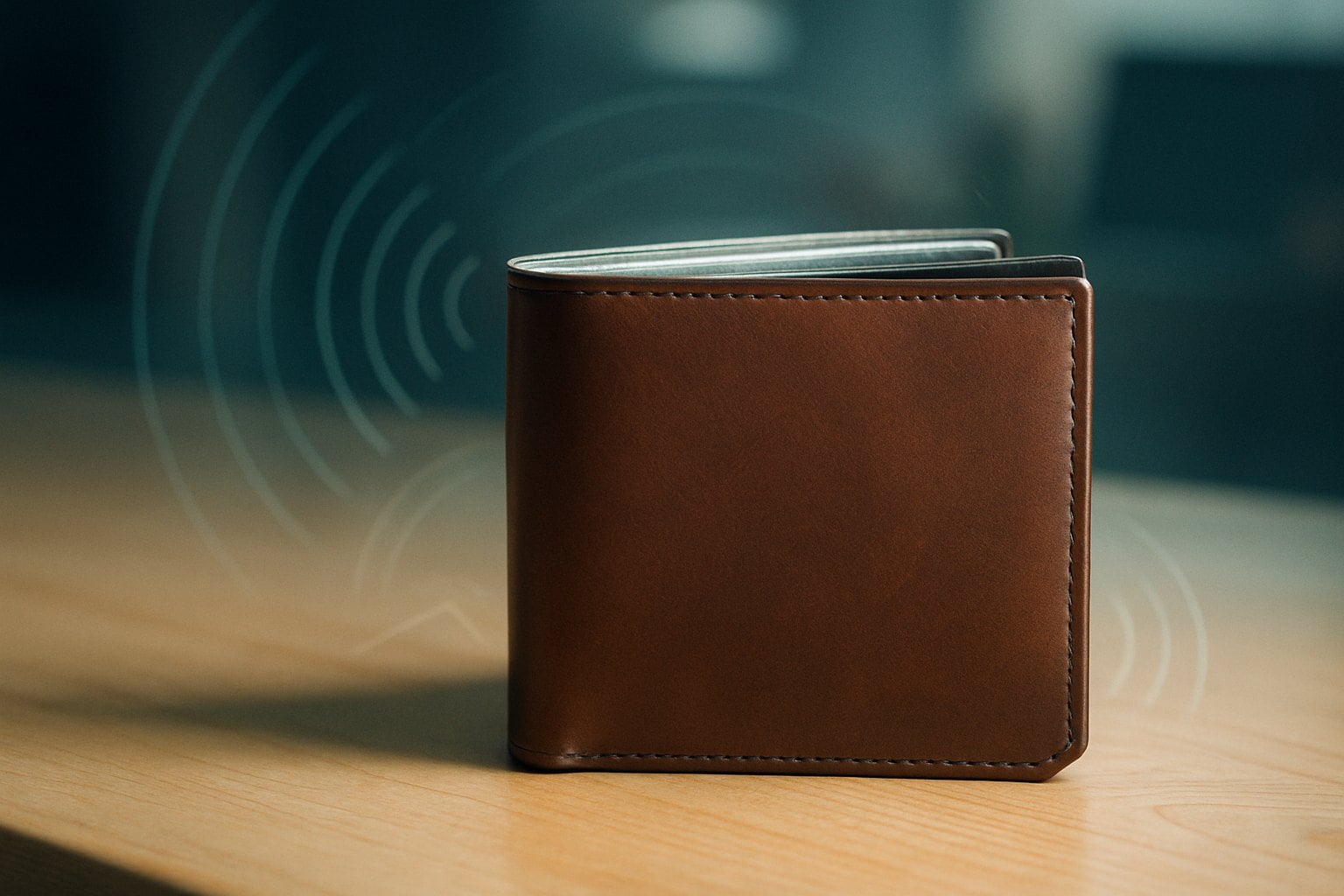
Without lab gear, a crude test is to leave a contactless card in the sleeve and try a known-good transit or payment terminal at normal distance. If taps fail inside the sleeve and succeed immediately outside, the liner is doing something. If taps succeed through the closed wallet, coverage is incomplete—check for gaps, phone magnets, or cards riding in an unlined outer pocket.
Do not assume military-grade claims on packaging. Look for continuous metalized fabric, full wrap, and honest frequency ranges rather than fear copy alone. Replace cracked sleeves; a torn liner is a slot antenna.
Frequently Asked Questions
How does RFID blocker work in a wallet?
A blocker is usually a conductive liner or sleeve that weakens the reader field so the card antenna cannot power up and answer. It is passive shielding, not software on your bank account. Coverage must surround the chip; open pockets and partial foil patches underperform.
How does RFID blocking card work next to payment cards?
A metalized blocking card tries to sit in the field path and detune or shield nearby antennas. Results depend on stack order and wallet shape. A dedicated full sleeve around each sensitive card is more consistent than hoping one middle card protects every slot.
Can RFID cards be hacked in everyday settings?
Specialized equipment can interact with some tags at short range, and poor older systems are weaker than modern payment tokenization. Everyday “walk-by drain your account” risk is generally lower than phishing, stolen-card use, and account takeover. Prioritize alerts and card controls alongside any sleeve.
Will RFID blocking stop me from tapping to pay?
If the card stays inside a strong sleeve, legitimate terminals may fail until you remove it—that is expected. Slide the card out to pay, then return it to the sleeve. If you need constant taps, use a partially open pocket design and accept the tradeoff, or keep only low-risk cards ready to tap.