


What is love bombing?
Love bombing is intense affection, praise, attention, gifts, or future talk that arrives so fast it overwhelms your boundaries. It can look romantic at first, but the concern is control: the person may use closeness, guilt, or urgency to make you dependent before you can judge the relationship clearly.
Why it feels flattering at first
Love bombing often starts with the exact things many people want: attention, consistency, compliments, excitement, and the feeling that someone finally “gets” them. That is why it can be confusing. The early stage may feel warm rather than threatening.
The problem is pace and pressure. Healthy affection leaves room for your life. Manipulative affection tries to become your life before trust has had time to grow.
A person might text all day, talk about soulmates after one date, send expensive gifts you did not ask for, or say they have never felt this way before. None of those details proves harm by itself. The pattern matters.
Common signs of love bombing
Cleveland Clinic’s overview of love bombing describes the behavior as intense attention that can be used to manipulate. In everyday dating, watch for affection that comes with a demand attached.
| Behavior | How it may feel | Why it can be risky |
|---|---|---|
| Constant compliments | Special, chosen, unusually seen | Can make you ignore missing trust |
| Expensive or unwanted gifts | Flattered but obligated | May create guilt or debt |
| Rushing exclusivity | Exciting and serious | Can cut off normal evaluation time |
| Demanding constant contact | Important, needed, responsible | Can become monitoring or control |
| Reacting badly to boundaries | Guilty or afraid to disappoint | Shows affection may depend on compliance |
Love bombing versus real love
Real affection can be enthusiastic. It can also be patient. The difference shows up when you slow things down, say no, or keep commitments outside the relationship.
A healthy person may feel disappointed, but they can respect your pace. A manipulative person may sulk, accuse you of not caring, demand reassurance, or turn your boundary into proof that you are hurting them.
If you need more detail on the contrast, the related guide on love bombing vs. real love breaks down pace, respect, consistency, and boundaries. A second angle on love bombing and real love can help if you are comparing mixed signals.
The boundary test
Try a small, clear boundary. “I cannot text during work.” “I want to see my friends Friday.” “I am not ready to talk about moving in.” Then watch the response.
The words matter less than the pattern after the boundary. Do they respect it without punishment? Do they keep pushing? Do they apologize and change, or do they make you responsible for their distress?
One uncomfortable conversation does not define a person. Repeated pressure after a clear no is different. That is the point where affection starts to feel like a leash.
The pattern can move in stages
Many people describe a first stage that feels almost unreal: constant attention, intense praise, fast promises, and a sense that the relationship has skipped ordinary uncertainty. This stage can be intoxicating because it seems to remove doubt.

The next stage may be pressure. The person wants more time, more access, more reassurance, or more control over who you see. You may start explaining ordinary choices as if they are betrayals.
Some relationships then move into withdrawal or punishment. Affection becomes conditional. The person who once praised you constantly now criticizes, disappears, threatens to leave, or says you caused the change by not loving them enough.
These stages do not always appear neatly. A person may switch between affection and criticism in the same day. The emotional whiplash is part of what makes it hard to think clearly.
How it shows up on dating apps
On dating apps, the pace can be even faster because the relationship begins in messages. A match may call you perfect, ask to move off-app immediately, send long romantic paragraphs, and talk about a future before meeting.
The guide to love bombing on dating apps covers those app-specific patterns. Pay attention when praise appears before the person knows you, especially if they avoid normal verification such as a video call, public meeting, or consistent details.
Imagine a match who says you are their dream person on day two, asks you to delete the app on day three, and becomes hurt when you keep plans with friends. The issue is not romance. The issue is the speed at which your independence becomes a problem.
Love bombing in romance scams
Scammers use affection as a grooming tool. The Federal Trade Commission’s guide to romance scams explains how criminals build emotional trust before asking for money. The affection may be fake, but the pressure feels personal.
A scammer may start with a wrong-number text, a dating-app match, a social media message, or a story about working overseas. The attention comes first. The emergency, investment pitch, travel problem, medical bill, or crypto opportunity comes later.
If the person asks for money, gift cards, cryptocurrency, bank access, private photos, or identity documents, treat that as a serious safety issue. Save messages and payment details. If money was lost through online fraud, the FBI’s IC3 accepts internet crime complaints.
Check identity claims without escalating
When the concern is a possible fake identity, focus on consistency. Does the name match the phone number? Do photos appear elsewhere? Does the person’s location, job, and story stay stable?
A people search can help compare public identity clues, while a reverse phone lookup can help when a number is part of the story. These tools cannot prove someone’s feelings, and they should not be used to harass. Use them to slow down decisions about trust, money, and safety.
If you suspect catfishing alongside intense affection, read signs you are being catfished even if it feels real. Romance scams often work because the emotional part feels more convincing than the factual part.
Healthy affection has room for your life
A healthy new relationship can be exciting without becoming all-consuming. You can keep seeing friends, sleep, work, parent, study, or take space without having to defend your loyalty every time.
Healthy affection also tolerates ordinary information gaps. Someone who barely knows you should not need your passwords, financial details, private photos, home access, or constant location updates to feel secure.
Use this question: does the connection make your world bigger or smaller? A good relationship may change routines, but it should not require you to cut off everyone who helps you think independently.
Listen when trusted people notice a change
Friends and family can be wrong, but they can also see changes you are too close to notice. If several people say you seem anxious, isolated, rushed, or unlike yourself, take that seriously enough to pause.
You do not have to share every detail. Start with the pattern: “This person gets upset when I am unavailable,” or “They want commitment faster than I do.” Saying it plainly can make the pressure easier to evaluate.
If the person you are dating tries to turn you against anyone who questions the pace, that is useful information. Healthy partners do not need you to lose your support system to prove devotion.
When intense affection is not the same problem
Not every fast-moving connection is manipulative. Some people are expressive, generous, or excited early on and still respect limits. The difference is what happens when reality slows the fantasy down.
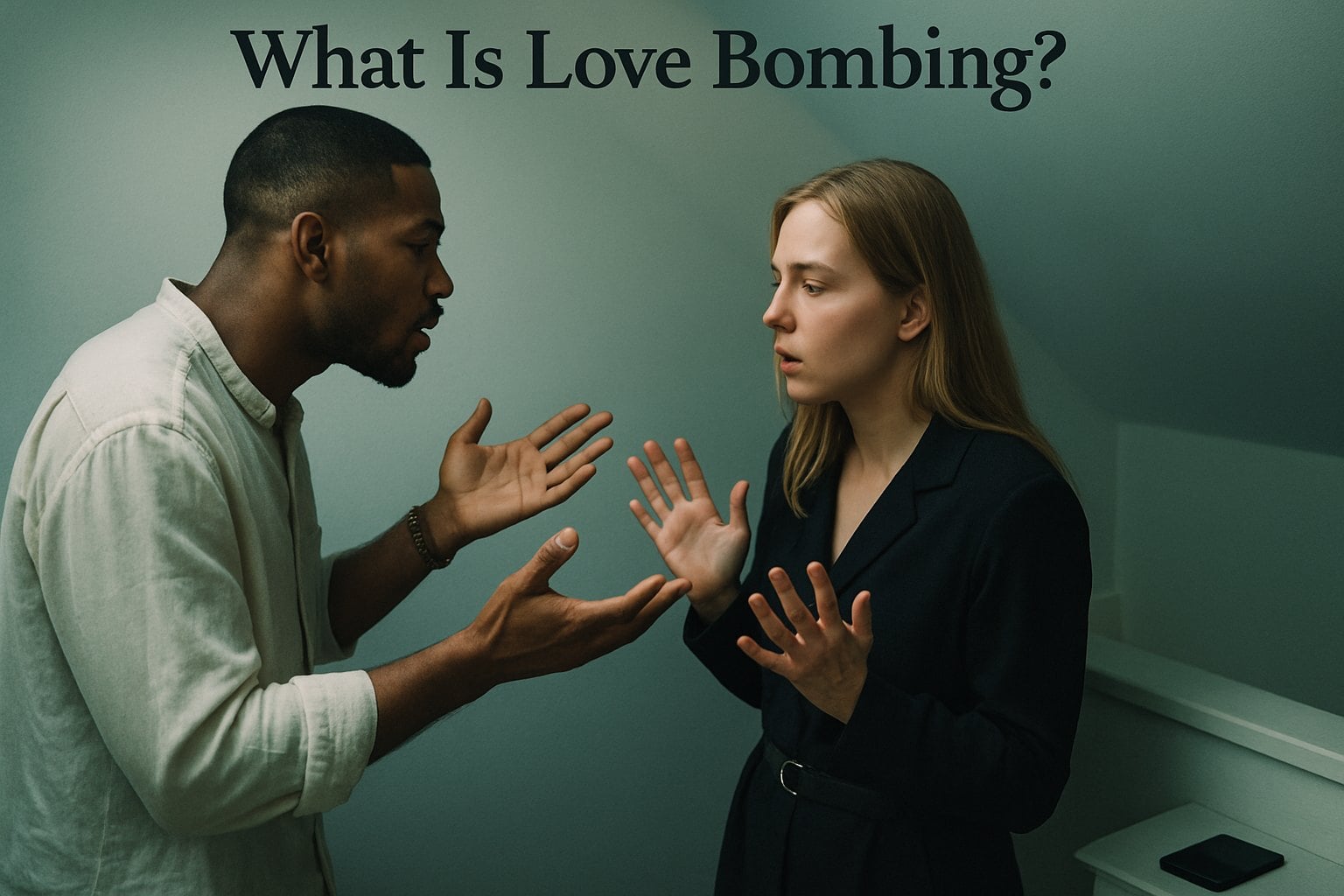
If you ask for a slower pace and the person adjusts, that is a good sign. If they keep pushing, punish you, or make you responsible for their emotional stability, the affection is no longer just enthusiasm.
Look for consistency over performance. Grand gestures are easy to stage. Respect for ordinary boundaries over several weeks tells you more.
Protect accounts, photos, and devices
Emotional pressure can become digital pressure. Someone may ask for passwords as proof of trust, request private images, push for location sharing, or want access to your phone. Those requests can create long-term risk.
Keep passwords private. Review shared location settings. Be cautious with intimate images, especially if the person reacts badly to boundaries. If you already shared access, change passwords from a safe device and turn on two-factor authentication.
If the relationship ends, check shared subscriptions, cloud albums, smart-home access, payment apps, and recovery email addresses. A breakup is easier when your digital life is not still open to someone who ignored your limits.
What to do if the attention feels controlling
Start by naming the behavior privately, not to win an argument but to clarify your own experience. Are you changing plans because you want to, or because the reaction will be exhausting? Are gifts making you happy, or making you feel indebted?
Set a boundary that protects time, privacy, money, or pace. Keep it simple. If the person respects it consistently, you have more information. If they punish the boundary, you also have information.
Talk to someone outside the relationship. Isolation makes manipulation stronger. A friend, family member, counselor, or local support organization can help you compare what is happening with how you normally make decisions.
Boundary scripts you can actually use
Clear language helps when the other person keeps pulling the conversation into emotion. Try: “I like getting to know you, but I am not ready for that.” Or: “I am not available to text during work.” Or: “I do not share passwords or money in a new relationship.”
Do not over-explain. A long defense gives a manipulative person more points to argue with. Short boundaries are easier to repeat and easier for trusted friends to understand if you need help later.
If the response is respectful, the relationship may still have room to slow down. If the response is anger, guilt, threats, or a sudden flood of apologies followed by the same pressure, take the pattern seriously.
Leaving safely when pressure rises
If the person becomes threatening, monitors you, demands passwords, shows up uninvited, or uses private images as leverage, prioritize safety over explaining yourself perfectly. Save evidence, stop sharing new information, and get support from people you trust.
Do not announce a long debate if you believe the person will retaliate. A short message, blocked contact, changed passwords, and help from friends may be safer than one more conversation.
For scam situations, stop sending money and stop negotiating. For relationship situations, make a plan that accounts for housing, transportation, devices, shared accounts, and who knows where you are.
After you end contact
The quiet after intense attention can feel strange. That does not mean you made the wrong call. It may mean your nervous system was trained to expect constant messages, apologies, praise, or conflict.
Mute or block channels that pull you back into the cycle. Ask friends not to pass along updates. If money, images, threats, or account access were involved, keep evidence and focus on practical protection before emotional closure.
For scam-related pressure, write down usernames, phone numbers, payment handles, wallet addresses, email addresses, and dates before blocking. Those details are easy to lose once accounts disappear, and they may matter if you report fraud later. Keep copies somewhere the person cannot access, including cloud accounts they never used before.
Frequently Asked Questions
what is love bombing
Love bombing is overwhelming affection, praise, gifts, or attention that arrives very early and may be used to create dependency or control. It can feel romantic at first, but it becomes concerning when your boundaries, time, money, or outside relationships are pressured.
what is love bombing mean
It means someone is flooding you with affection in a way that may be manipulative rather than genuinely respectful. The key issue is not liking you intensely; it is whether the affection comes with pressure, guilt, isolation, or demands for fast commitment.
what is a love bomb
A love bomb is a burst of intense romantic attention, such as constant texts, big promises, expensive gifts, or sudden future plans. One gesture is not automatically harmful. The concern grows when the attention is used to rush trust or override your boundaries.
what is a love bomber
A love bomber is someone who uses intense affection to pull another person in quickly. They may be manipulative, insecure, abusive, or running a scam. The label matters less than the behavior: pressure, control, guilt, and repeated disrespect for boundaries.


