

Temu is a real, high-volume online marketplace that connects shoppers with third-party suppliers—often overseas—at aggressively low prices. “Safe” depends on what you mean: corporate legitimacy, payment security, product quality, personal data exposure, and scam risk around the brand are separate questions with different answers.
Is Temu safe for everyday shopping?
Is Temu safe enough for low-stakes household goods if you use a card with strong fraud controls, read reviews skeptically, and ignore off-platform “support” messages? For many shoppers, yes—with caveats. The company operates as a legitimate storefront, not a pure fake-storefront scam. That does not make every listing accurate, every gadget electrically trustworthy, or every inbox message truly from Temu.
Think in layers. Platform legitimacy is one layer. Listing honesty is another. Physical product safety (batteries, chargers, kids’ items, cosmetics) is a third. Account and payment hygiene is a fourth. Impersonation fraud that merely wears Temu’s logo is a fifth. Collapsing those layers into a single yes/no is how people either panic unnecessarily or trust blindly.
If a seller later texts you from a strange number about a “failed delivery fee,” treat that like any other cold contact: verify inside the official app or site, or run a reverse phone lookup before you engage. Marketplace noise and social-engineering noise often arrive together.
How the marketplace model shapes risk
Temu’s pitch is direct-to-consumer volume: many goods ship from overseas suppliers rather than a U.S. warehouse you can visit. Long transit times, variable quality control, and photo-perfect listings that do not match the box on your porch are structural outcomes of that model—not rare glitches.
You are rarely buying “Temu-branded craftsmanship” the way you buy from a single specialty manufacturer. You are buying access to a catalog where suppliers compete on price. Competition that brutal tends to cut corners somewhere: materials, sizing consistency, packaging, or documentation.
Price also trains your brain. A $12 “smart” gadget that would cost $60 from a known brand can be a bargain, a toy, or a fire hazard. The platform’s legitimacy does not certify every SKU. Your job is category selection: towels and phone cases are a different risk class than extension cords, e-bike parts, infant products, or skin creams.
Coverage of bargain fashion and marketplace pricing swings shows how sensitive these models are to tariffs, shipping, and consumer scrutiny. “Always impossibly cheap” is not a permanent law of physics—costs, rules, and logistics shift, and listing prices shift with them.
Product quality versus product safety
Quality is “does this look and last like the photo suggested?” Safety is “can this injure someone, leak chemicals, overheat, or fail a basic expectation for its category?” A crooked picture frame is annoying. A counterfeit charger that overheats is a different problem.
Common disappointment patterns show up again and again in public complaints: fabric thinner than expected, color mismatch, missing accessories, “stainless” that rusts, electronics that die in weeks, and sizing charts that feel invented. Creators who film unboxings thrive because the gap between render and reality is entertainment—and a warning.
For higher-risk categories, prefer brands with a clear manufacturer identity, certifications you can verify, and return economics that still make sense after shipping. If a smoke detector, child car seat, or medical device is on sale for a fraction of regulated-market prices, assume the discount is buying risk, not genius logistics.
Batteries and USB power accessories deserve special caution. Cheap cells and uncertified wall warts are recurring themes across discount electronics, not only on one app. Use them on noncritical devices, avoid overnight charging on flammable surfaces, and retire anything that swells, smells, or runs hot.
Cosmetics, supplements, and “personal care” serums are hard to evaluate from a thumbnail. Ingredients lists can be incomplete or optimistic. If your skin or health is on the line, stick to products and sellers you already trust offline.
| Concern | Lower-stakes approach | Higher-stakes approach |
|---|---|---|
| Home decor, cables (non-power), accessories | Order small; inspect on arrival | Skip unknown electrical items |
| Clothing and soft goods | Check fiber content and return window | Avoid items needing fire resistance claims |
| Chargers, batteries, heaters | Prefer known electrical brands elsewhere | Do not improvise safety-critical power |
| Kids’ products, cosmetics | Read ingredients and age labels carefully | Buy regulated categories from established retail |
| Account and payment | Virtual card, 2FA, unique password | Never pay gift cards to “support agents” |
Payments, refunds, and dispute leverage
Using a major credit card (or a virtual card number) beats wiring money or draining a debit account. Credit networks give you chargeback paths when a merchant process fails; debit hits cash immediately. Enable transaction alerts so a surprise reorder or subscription-like charge is obvious within hours.
Refunds on cross-border marketplaces can be slow, partial, or dependent on photo evidence and return shipping that costs more than the item. Before you buy, read the return window for that listing, not a generic homepage promise. Keep packaging until you confirm the item works.
If chat support stalls, escalate with documentation: order ID, timestamps, photos, and a clear ask (refund vs. replacement). Parallel-track your card issuer if deadlines approach. The FTC’s consumer guidance is a solid reference for how to organize complaints when online orders go wrong.
Public complaint volumes on rating sites do not automatically mean “fake company,” but they do mean you should budget time for friction. Check current profiles such as the BBB listing for Temu.com for patterns—delivery disputes, quality fights, cancellation issues—without treating any single star rating as a full audit.
App permissions, privacy, and “is the app safe?”
Install from official app stores, not random APK links in texts. Review permissions: a shopping app needs network access; it does not need your entire contact graph or continuous background location to show you socks. Deny what is unnecessary and revisit permissions after updates.
Use a unique password and multifactor authentication wherever offered. Shopping apps are credential-stuffing targets because people reuse passwords from email and banking. A breach elsewhere should not open your Temu account—and vice versa.
Marketing pixels, on-site behavior tracking, and aggressive personalization are normal in modern retail, not unique proof of malware. Still, minimize the data you hand over: skip optional profile fields, avoid storing unnecessary cards, and log out on shared devices. Separate malware myths from ordinary adtech: aggressive ads are not the same as a trojan, but phishing pages that mimic checkout absolutely are hostile.
Phishing remains more common than “the app stole my face.” A clone site with one letter off, a pushy SMS, or an email with a mismatched domain will beat sophisticated malware for most victims. Bookmark the real domain; do not trust the first search ad on a stressful day.
Impersonation scams that borrow Temu’s name
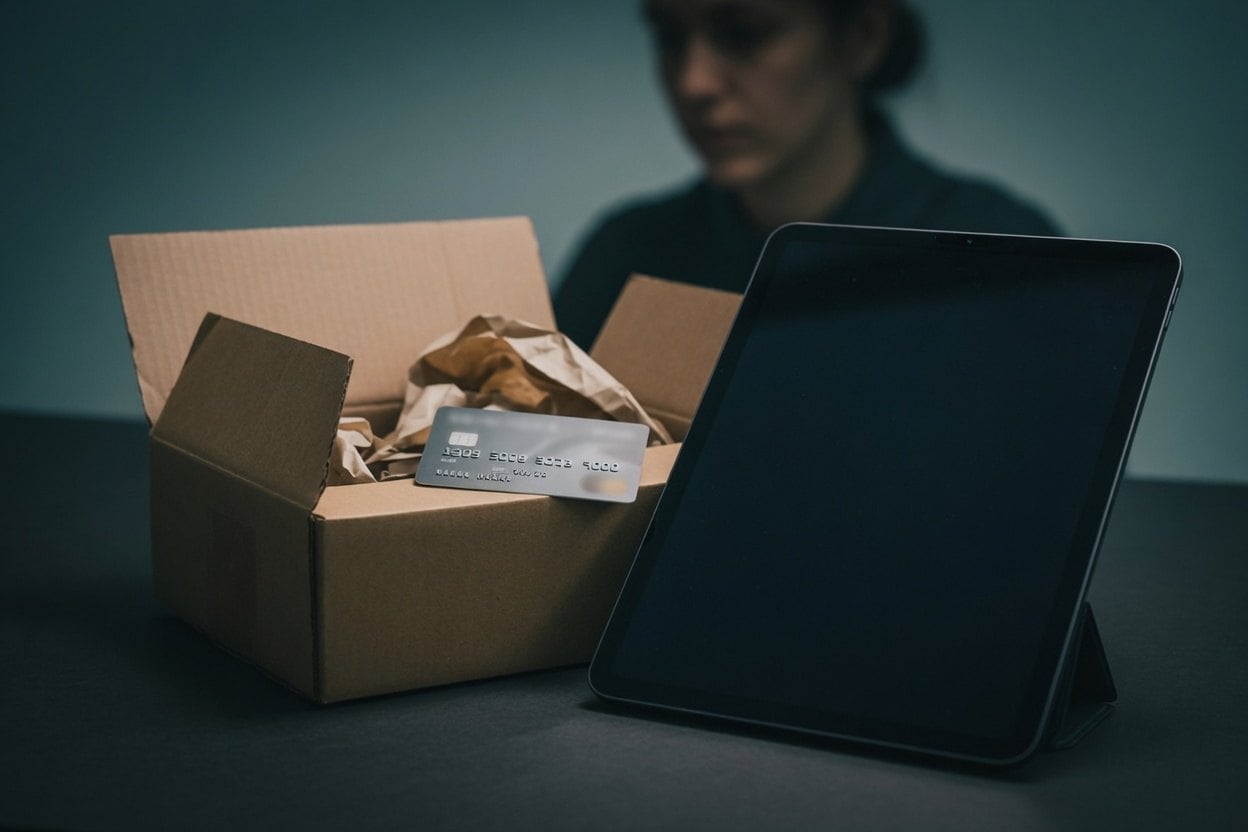
Picture this: you ordered LED lights last week. Today a text says customs is holding the parcel for a $1.90 fee and includes a short link. The real failure mode is haste. You tap, you “pay,” and someone else harvests a card or account cookie. The package was never held; the message never came from Temu logistics.
Other patterns: fake giveaway wheels on social media, influencer “promo codes” that route through shady intermediate sites, spoofed customer-service accounts on chat apps, and emails that mimic order confirmations for purchases you did not make. If you did not order it, do not “confirm shipping”—open the official app and check order history first.
When a stranger calls claiming to be marketplace support, hang up and start from your order page. If they left a callback number, investigate it with a reverse phone lookup and compare it to numbers published only inside your account messages. For deeper identity questions around a persistent harasser, a broader people search can help you understand whether the contact maps to a real local person or a disposable front.
Report fraud attempts through official in-app tools when available, your email provider’s report-phishing action, and FTC or BBB complaint flows. Your report will not refund a stranger’s victim, but it feeds pattern detection.
Gamification, urgency, and spending pressure
Spin wheels, countdown timers, referral ladders, and credit-for-play mini games are not accidental decoration. They are retention systems designed to keep you browsing past the item you opened the app to buy. That design can be legal and still be psychologically expensive.
Journalists and workplace writers have examined how gamified shopping blurs play and purchase. The BBC Worklife piece on Temu gamification is a useful lens: urgency UI is a product, not a weather event. If you notice “just one more credit” loops, set app time limits or switch to desktop with a cart checklist.
A practical countermeasure: decide the dollar ceiling and the item list before you open the store. Search those SKUs only. Checkout once. Close the app. Referral invites that require spamming your contacts are optional growth hacks—not obligations.
Ethics questions shoppers keep raising
Beyond personal risk, some buyers ask whether ultra-low prices externalize labor or compliance costs. Marketplace platforms that source heavily from complex supply chains face ongoing public scrutiny over labor standards and import rules. Those debates evolve with law and reporting; they are not settled by a single blog verdict.
If ethical sourcing is a hard requirement for you, bargain marketplaces with opaque supplier lists are a poor fit regardless of payment safety. Choose brands that publish factory audits, or buy less but from sellers you can interrogate. “Safe for my card” and “aligned with my values” can diverge.
Environmental cost is related: long-distance shipping of low-durability goods can mean more waste when items fail early. Durability is a safety issue for your wallet and a sustainability issue for landfills. Prefer fewer, better objects when the category allows it.
A practical checklist before you tap buy
Start with category triage. Decor and basic accessories first; safety-critical electronics and regulated kids’ gear last—or never. Read recent written reviews, not only star averages, and discount both ecstatic one-liners and unspecific rage.
Compare the landed cost: item, tax, shipping time you can tolerate, and return shipping if it fails. A $8 gadget that takes five weeks and cannot be returned cheaply is not $8 of value if you needed it Friday.
Harden the account: unique password, alerts, minimal stored data. Prefer credit or virtual cards. Never pay a courier fee through a random link. Never read card numbers to a chat agent who messaged you first.
On arrival, inspect immediately. Test electronics under supervision. Photograph defects within the return window. If the seller solution fails, use your card’s dispute path with a clean paper trail.
Scale of these platforms is huge—hundreds of millions of users in industry roundups—which means both mature logistics and industrial-scale complaint volume. Large does not mean careful on every SKU. Your filters still matter. Convenience is the default; deliberate buying is the skill.
Frequently Asked Questions
Is Temu safe to buy from?
Temu is a legitimate marketplace, so buying can be reasonable for low-risk goods if you control payments, verify orders only inside official channels, and stay skeptical of quality claims. It is less appropriate for safety-critical electronics, regulated children’s products, or anything you cannot afford to lose to defects or slow disputes.
Is it safe to order from Temu for home delivery?
Delivery itself is normal parcel logistics, but long international transit and porch theft still apply. Use trackable shipping views in the official app, require signature only when the option exists and matters, and treat unexpected “fee to release package” texts as scams until proven otherwise inside your account.
Is the Temu app safe?
Install only from official stores, limit permissions, and use a unique password with multifactor authentication when available. Most consumer harm around the brand comes from phishing and poor product quality, not a cartoon villain inside the APK—though you should still avoid sideloaded installers and unsolicited update links.
Is Temu legit and safe for payments?
Paying through the official checkout with a major credit card or virtual card is the standard risk posture for large online retailers. Legitimacy of the platform does not eliminate charge disputes, delayed refunds, or impostor agents. Never pay gift cards, crypto, or wire transfers to someone claiming to fix an order.
Is Temu safe to use if I only browse?
Browsing still involves tracking and account exposure if you are logged in, but it avoids product and delivery risk. Use privacy settings, skip unnecessary profile data, and stay alert for clone sites. If you create a wishlist, that alone should not move money—only authenticated checkout should.